

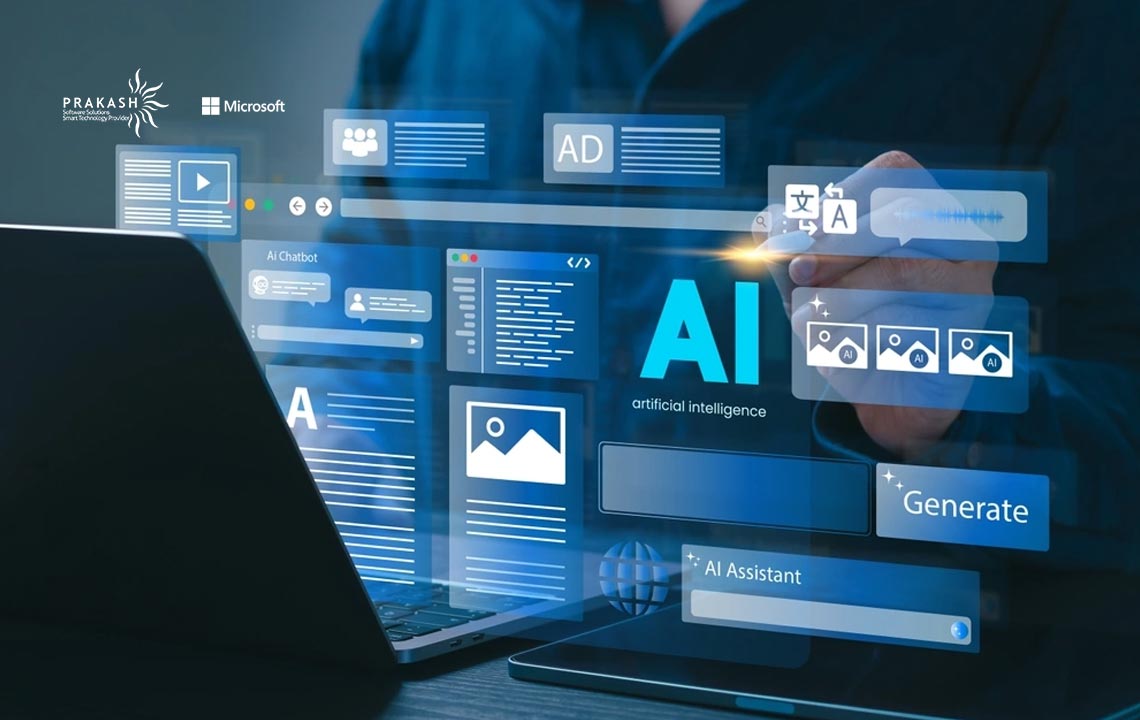
Artificial Intelligence (AI) is reshaping nearly every facet of modern business, from how organizations analyze data to how users interact with digital platforms. One of the most profound transformations can be seen in custom web application development, where AI is not just an enhancement—it’s becoming an integral part of the development process itself.
As businesses demand smarter, more adaptive, and data-driven solutions, web developers are leveraging AI to build applications that are faster, more personalized, and capable of learning from user behavior. The result? Applications that go beyond static functionality to deliver dynamic, predictive, and intuitive digital experiences.
This article explores the impact of AI on custom web application development, showcasing how it’s revolutionizing everything from design automation to predictive analytics. We’ll also share practical insights and real-world applications that highlight the opportunities and challenges of building AI-powered web solutions.
How AI is Redefining the Web Development Landscape?
The integration of AI into web development is not merely a passing trend—it’s a fundamental evolution. Developers are increasingly adopting AI-powered tools and frameworks to improve efficiency, reduce human error, and enhance user experience.
Smarter Development Processes
AI is automating many repetitive coding and testing tasks. Advanced algorithms can now suggest or even write sections of code, detect errors before deployment, and optimize performance. These capabilities allow developers to focus on creativity and strategic problem-solving instead of manual debugging or routine maintenance.
Adaptive and Data-Driven Applications
Web applications no longer have to rely solely on static logic. AI-driven systems can analyze user behavior in real time, learn from interactions, and adapt accordingly. For instance, eCommerce websites can personalize product recommendations based on browsing history, while enterprise applications can anticipate operational needs based on previous data patterns.
In short, AI is turning web applications from reactive systems into proactive, learning-based platforms that evolve continuously with user input.
The Role of AI in Enhancing User Experience
User experience (UX) sits at the heart of successful web applications. AI is revolutionizing UX by making interfaces more intuitive, responsive, and personalized.
Personalized Interactions
AI enables dynamic personalization—applications that tailor content, design elements, and features based on user preferences. For instance, an AI-driven platform can learn how users navigate, what they search for, and what features they use most often. It can then adjust layouts, suggest relevant options, or automate repetitive tasks to create a seamless user journey.
A prime example can be seen in the automotive industry, where an automotive ecommerce website development company may use AI to enhance digital showrooms. AI tools can recommend vehicles based on customer behavior, generate 360° visualizations, and even predict financing options that suit individual buyers. This personalization not only improves user engagement but also drives higher conversion rates.
AI-Powered Chatbots and Virtual Assistants
Chatbots are one of the most visible AI-driven features in web applications today. They provide 24/7 customer support, automate routine inquiries, and handle service requests efficiently. Unlike traditional bots that rely on static scripts, AI-powered bots understand context, tone, and intent, making conversations more natural and helpful.
By integrating natural language processing (NLP) and machine learning (ML), web applications can deliver human-like interaction experiences—reducing customer frustration while improving response times.
Intelligent Automation in the Development Lifecycle
AI is not just enhancing the end product—it’s transforming the entire custom web application development lifecycle, from planning to maintenance.
Automated Code Generation
AI-assisted coding tools such as GitHub Copilot and Tabnine can generate entire code snippets based on brief natural language inputs. This helps developers accelerate the development phase, reduce manual labor, and minimize syntax errors.
These tools also learn from historical projects, suggesting contextually relevant code, libraries, and design patterns, which increases productivity without compromising quality.
Predictive Testing and Quality Assurance
Traditional software testing often requires countless hours of manual effort. With AI, predictive testing models can simulate thousands of scenarios and automatically detect vulnerabilities, performance issues, and compatibility errors before they reach production.
AI-driven testing frameworks can even prioritize test cases based on the likelihood of failure, ensuring that high-risk areas receive attention first. This approach improves product stability and significantly reduces post-deployment defects.
Smart Maintenance and Updates
AI’s predictive capabilities extend beyond launch. Web applications equipped with machine learning can identify performance degradation or potential security breaches before they occur. For instance, an AI model can monitor server usage patterns and alert teams when resource demand spikes or when data suggests an impending system crash.
This proactive maintenance minimizes downtime and enhances reliability—a critical advantage for businesses operating in competitive digital environments.
Data Analytics and Decision Intelligence
Data is the backbone of modern web applications, but interpreting massive datasets manually is nearly impossible. AI bridges this gap by enabling applications to analyze and act upon data in real time.
Real-Time Analytics and Insights
AI algorithms can process and analyze user behavior, transaction histories, and system logs to uncover actionable insights. These insights help businesses identify bottlenecks, predict customer needs, and optimize marketing strategies.
For example, a custom web application development services provider might integrate AI-driven analytics into a business portal to track user engagement, detect anomalies, and recommend design changes that improve conversion rates. By leveraging machine learning models, decision-makers can shift from reactive reporting to proactive strategy formulation.
Predictive Modeling for Business Growth
AI takes analytics one step further through predictive modeling. Using historical data, AI systems can forecast future outcomes—such as market demand, user retention, or product performance.
For businesses, this means being able to anticipate trends rather than simply reacting to them. Predictive intelligence empowers teams to make smarter investments, fine-tune operations, and improve customer acquisition strategies with greater precision.
Security Enhancements Through AI
As cyber threats grow in sophistication, web application security has become a pressing concern. AI plays a critical role in fortifying applications against potential risks.
AI-Driven Threat Detection
AI-based security systems can continuously monitor user activity, identify irregular behavior, and block suspicious access attempts in real time. Unlike traditional firewalls that rely on static rules, AI systems evolve with each new threat, learning from previous attacks to improve future defenses.
For example, machine learning algorithms can detect login anomalies that suggest credential theft or automated attacks like bots and DDoS attempts.
Automated Compliance and Risk Management
AI also assists in maintaining compliance with regulations like GDPR or HIPAA by automatically tracking data usage and identifying violations. It can generate compliance reports, flag irregularities, and even recommend corrective actions—reducing the burden on IT teams and improving governance.
These proactive security capabilities build trust with users while protecting the integrity of the digital ecosystem.
AI and the Evolution of Design Thinking
The impact of AI extends beyond coding and data—it also influences how developers approach design. Web applications today must be not only functional but also emotionally engaging and accessible.
AI-Enhanced UI/UX Design
AI tools can analyze user interactions and provide insights into how people engage with visual elements. For instance, heatmaps generated by AI can reveal which parts of a webpage attract the most attention, helping designers optimize layouts for usability.
Moreover, AI-driven design platforms can suggest color schemes, typography, and visual hierarchies based on brand guidelines, reducing design time and maintaining consistency across projects.
Accessibility Through AI
Inclusivity is a crucial part of modern design. AI technologies like voice recognition, text-to-speech, and image captioning enhance accessibility for users with disabilities. By incorporating these features, developers ensure that applications cater to a broader audience while complying with accessibility standards.
A company like Centric has shown how combining AI-driven design tools with human creativity leads to more inclusive, scalable, and emotionally intelligent digital products that truly resonate with users.
Use Cases of AI in Custom Web Applications
AI’s real-world impact can be seen across industries, with custom applications adopting it for efficiency, personalization, and innovation.
eCommerce
AI-driven recommendation systems have become a standard in eCommerce. By analyzing user behavior, purchase history, and preferences, AI suggests relevant products, improving cross-sell and up-sell opportunities. Additionally, AI chatbots handle thousands of customer inquiries simultaneously, improving satisfaction while reducing support costs.
Healthcare
AI-powered web apps assist healthcare providers by managing patient data, predicting health risks, and automating appointment scheduling. Predictive analytics tools can even alert doctors about potential health issues before symptoms manifest, improving patient outcomes.
Manufacturing
In manufacturing, AI-enabled web applications monitor machinery performance, predict maintenance needs, and optimize production schedules. These predictive systems minimize downtime and enhance overall operational efficiency.
Education
Educational platforms leverage AI to create adaptive learning environments. By analyzing student performance, these systems customize lesson plans, recommend learning resources, and provide real-time feedback to educators.
Each of these examples demonstrates how AI transforms static web applications into intelligent, context-aware systems that adapt to users’ evolving needs.
Challenges and Considerations in AI Integration
While the advantages of AI are undeniable, integrating it into web applications isn’t without challenges.
- Data Privacy: AI systems rely heavily on user data. Ensuring compliance with privacy laws and maintaining transparency about data usage is critical.
- Complexity of Implementation: Developing and training AI models requires specialized expertise and substantial computing resources.
- Ethical Concerns: AI decision-making must be free of bias, requiring careful design and oversight.
- Cost: Advanced AI features may increase development costs, making them less accessible for small businesses.
Addressing these challenges requires strategic planning, ethical design practices, and continuous monitoring to ensure responsible AI adoption.
Conclusion
Artificial Intelligence has fundamentally changed the landscape of custom web application development, ushering in an era of smarter, faster, and more user-centric digital experiences. From automated coding and predictive analytics to enhanced security and personalization, AI empowers developers and businesses alike to build applications that evolve alongside their users.
The future of web development lies not in replacing human creativity but in augmenting it with intelligent systems that can learn, adapt, and optimize in real time. As AI continues to mature, companies that embrace these innovations thoughtfully will be the ones shaping the next generation of digital transformation.


