

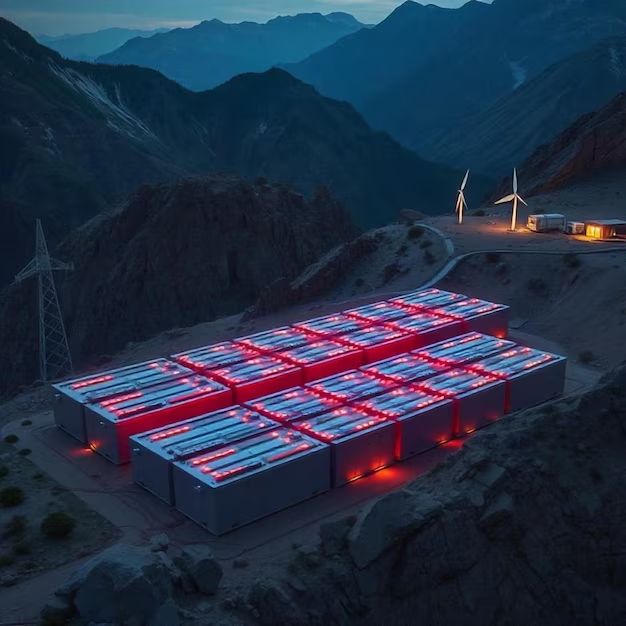
When Tesla announced its large-scale battery project in China, it signaled more than just another factory expansion. It marked a shift in how renewable energy storage could be produced, deployed, and scaled worldwide. China’s role as a manufacturing powerhouse combined with Tesla’s innovation-first mindset has created a project that sits at the crossroads of energy, technology, and geopolitics. This initiative is not only about batteries; it’s about redefining the future of clean power. Understanding its scope helps explain where global energy markets may be heading next.
Tesla’s Vision for Renewable Energy in China
Tesla’s renewable energy strategy has always extended beyond electric vehicles. In China, the company sees energy storage as the missing link between clean power generation and reliable consumption. Solar and wind energy are abundant, but without efficient storage, much of that power goes unused.
By investing heavily in battery manufacturing within China, Tesla aligns itself with the country’s aggressive clean energy targets. China aims to peak carbon emissions before 2030 and achieve carbon neutrality by 2060. Tesla’s battery project supports this roadmap by offering scalable storage solutions that stabilize renewable grids and reduce reliance on coal-based backup power.
Why China Is Central to Tesla’s Battery Strategy
China offers a unique mix of advantages that few other countries can match. It has an established supply chain for lithium-ion batteries, access to raw materials, and a skilled manufacturing workforce. These factors allow Tesla to produce batteries at lower costs while maintaining quality and volume.
Another key factor is proximity to demand. China is the world’s largest renewable energy market, with massive solar farms and wind installations. Producing batteries locally reduces logistics costs and speeds up deployment. This localized approach also helps Tesla adapt its products to regional grid requirements and energy policies.
Inside the Battery Technology Powering the Project
At the heart of the Tesla China battery project is advanced energy storage technology designed for durability and efficiency. Tesla focuses on improving energy density, charging cycles, and thermal management. These improvements allow batteries to store more power, last longer, and operate safely under demanding conditions.
The project also emphasizes modular battery systems. This means storage units can be scaled up or down depending on need, from industrial plants to city-wide energy grids. Such flexibility makes renewable energy more practical for regions with fluctuating power demand.
Supporting Grid Stability and Energy Independence
One of the biggest challenges with renewable energy is inconsistency. Solar power drops at night, and wind energy depends on weather. Tesla’s battery systems address this by storing excess energy during peak production and releasing it when supply dips.
In China, this has a direct impact on grid stability. Battery storage reduces blackouts, balances load, and minimizes the need for fossil fuel-based emergency power. Over time, this strengthens energy independence and lowers operational costs for utilities and governments alike.
Economic Impact on the Global Energy Market
Tesla’s China battery project doesn’t just affect local infrastructure; it sends ripples through the global energy market. By lowering production costs, Tesla helps drive down the price of large-scale energy storage worldwide. Cheaper batteries make renewable energy projects more attractive in emerging markets.
This increased affordability accelerates adoption across Asia, Europe, and parts of Africa. As more countries invest in storage-backed renewable systems, global demand for fossil fuels may decline faster than previously expected. Tesla’s project, therefore, plays a quiet but powerful role in reshaping global energy economics.
Competition and Market Influence
Tesla’s presence in China also intensifies competition among battery manufacturers. Local and international companies are pushed to innovate faster, improve efficiency, and reduce costs. This competitive pressure benefits the entire renewable energy sector.
As standards rise, energy storage becomes more reliable and accessible. Tesla’s influence helps set benchmarks for performance and sustainability, encouraging responsible sourcing and cleaner production methods across the industry.
Environmental Benefits Beyond Emissions
While reducing carbon emissions is the primary goal, the environmental benefits go further. Efficient battery storage reduces energy waste and optimizes renewable output. This means fewer resources are required to generate the same amount of usable power.
Tesla also continues to invest in recycling technologies to recover valuable materials from used batteries. This circular approach minimizes environmental damage from mining and supports long-term sustainability in battery production.
Challenges and Real-World Constraints
Despite its promise, the Tesla China battery project faces real challenges. Supply chain volatility, raw material sourcing, and regulatory changes can affect production timelines. Geopolitical tensions may also influence trade policies and technology sharing.
Tesla addresses these risks through diversification and long-term supplier agreements. While challenges remain, the company’s track record suggests a willingness to adapt and evolve as conditions change.
What This Means for the Future of Renewable Energy
The success of Tesla’s battery initiative in China could serve as a blueprint for similar projects worldwide. It demonstrates how large-scale storage can unlock the full potential of renewable energy. Countries struggling with grid reliability may look to this model as proof that clean energy can be both stable and cost-effective.
As energy storage becomes more mainstream, renewable power may shift from being an alternative option to the default energy source. Tesla’s role in this transition places the company at the center of a global energy transformation.
Frequently Asked Questions
What is the main goal of the Tesla China battery project renewable energy initiative?
The primary goal is to provide large-scale energy storage solutions that support renewable power generation, improve grid stability, and reduce dependence on fossil fuels.
How does this project impact global renewable energy markets?
By lowering battery costs and improving efficiency, the project accelerates renewable adoption worldwide and makes clean energy more competitive.
Why did Tesla choose China for this battery project?
China offers strong manufacturing infrastructure, high renewable energy demand, and supportive policies, making it ideal for large-scale battery production.
Are these batteries only used in China?
While many are deployed locally, the technology and cost benefits influence Tesla’s global energy storage solutions and international projects.
Does the project contribute to environmental sustainability beyond clean energy?
Yes, it supports energy efficiency, reduces waste, and includes battery recycling efforts to minimize environmental impact.
Conclusion
The Tesla China battery project renewable energy initiative represents a pivotal moment in the evolution of clean power. It combines innovation, scale, and strategic location to tackle one of renewable energy’s biggest challenges: storage. Beyond China, its influence is shaping global markets, encouraging competition, and accelerating the transition to sustainable energy systems. As energy demands grow, projects like this offer a glimpse into a cleaner, more resilient future.
Stay in touch to get more updates & alerts on Technofeed! Thank you


