

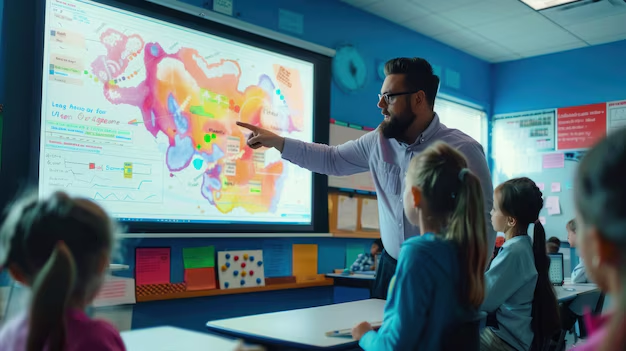
Elementary education lays the groundwork for a child’s academic and personal growth. In many European countries, the term osnovno uciliste represents more than just a school—it reflects a structured system designed to nurture young minds. This system focuses on building essential skills, values, and discipline from an early age. Understanding how osnovno uciliste works helps parents, educators, and policymakers support children more effectively. This guide explores its structure, purpose, and long-term impact in a clear, human-centered way.
What Is Osnovno Uciliste?
Osnovno uciliste refers to the formal system of elementary education in several Central and Southeast European countries. It typically serves children from early childhood through pre-adolescence. The goal is to provide a balanced mix of academic learning and social development.
Unlike informal early education, this system follows a nationally regulated curriculum. Schools operate under education ministries, ensuring consistency in teaching standards. For many families, osnovno uciliste is a child’s first real introduction to responsibility and structured learning.
Meaning and Origin of the Term
The phrase comes from South Slavic languages, where “osnovno” means basic or fundamental, and “uciliste” means place of learning. Together, they describe an institution focused on foundational education.
Historically, osnovno uciliste emerged to ensure equal access to education. It aimed to reduce literacy gaps and provide every child with the same starting point. Over time, the system evolved but retained its core mission of inclusivity.
Structure of the Osnovno Uciliste System
The osnovno uciliste system is carefully divided into stages that align with a child’s cognitive and emotional development. Each phase builds upon the previous one, creating a smooth learning progression.
Most systems begin around the age of six and continue until early teenage years. Schooling is usually compulsory, reinforcing the importance of basic education in society.
Age Groups and Grade Levels
Children typically enroll in the first grade at six or seven years old. The system often spans eight to nine years, depending on national regulations.
Lower grades focus on foundational skills like reading, writing, and arithmetic. Upper grades gradually introduce more complex subjects. This gradual transition helps students adapt without feeling overwhelmed.
Compulsory Education Requirements
Attendance in osnovno uciliste is legally mandatory in most countries where it exists. Governments enforce this to ensure no child is left behind.
Parents are responsible for enrollment and regular attendance. Schools, in turn, must provide safe environments and qualified teachers. This shared responsibility strengthens educational outcomes.
Curriculum and Subjects Taught
The curriculum in osnovno uciliste is designed to be broad and balanced. It emphasizes intellectual growth while also encouraging creativity and physical well-being.
Students are exposed to multiple subjects early on. This helps them discover interests and strengths while developing a well-rounded personality.
Core Academic Subjects
Language and mathematics form the backbone of the curriculum. Students learn grammar, reading comprehension, and basic writing skills. Mathematics covers arithmetic, geometry, and logical reasoning.
Science subjects introduce children to the natural world. Social studies help them understand history, geography, and civic responsibility. These subjects are taught progressively to match maturity levels.
Arts, Sports, and Social Skills
Creative subjects like music and visual arts play a vital role. They allow children to express emotions and develop imagination.
Physical education promotes health, teamwork, and discipline. Many schools also emphasize social skills, teaching cooperation, respect, and empathy. These lessons often leave a lasting impression beyond academics.
Teaching Methods and Classroom Environment
Teaching in osnovno uciliste blends traditional instruction with modern approaches. The aim is to keep students engaged while maintaining academic rigor.
Classrooms are structured but not rigid. Teachers are encouraged to adapt methods based on student needs and learning styles.
Role of Teachers in Early Education
Teachers in this system are not just instructors; they are mentors. Many students remember their elementary teachers for life because of the close guidance provided.
Educators often handle the same class for multiple years in lower grades. This continuity builds trust and helps teachers understand individual learning patterns.
Assessment and Student Progress
Evaluation methods include written tests, oral participation, and practical assignments. Grades are important, but feedback is equally emphasized.
Teachers regularly communicate with parents about progress. This collaboration ensures that learning continues beyond the classroom. The focus remains on improvement rather than competition.
Importance of Osnovno Uciliste in Child Development
Osnovno uciliste plays a critical role in shaping a child’s future. It influences academic success, social behavior, and self-confidence.
The experiences gained during these years often determine how children approach learning later in life. A positive environment can inspire curiosity and resilience.
Building Academic Foundations
Basic literacy and numeracy skills developed here are essential for higher education. Without a strong foundation, advanced learning becomes difficult.
Early exposure to problem-solving and critical thinking prepares students for complex subjects. These skills are transferable to many life situations.
Social and Emotional Growth
School is often where children form their first friendships outside the family. They learn to share, cooperate, and resolve conflicts.
Teachers guide students through emotional challenges, helping them manage stress and frustration. This emotional intelligence is just as important as academic knowledge.
Challenges and Modern Reforms
Like any education system, osnovno uciliste faces challenges. Changing technology, diverse classrooms, and evolving job markets demand constant adaptation.
Many countries are actively reforming their elementary education systems. The goal is to keep learning relevant and inclusive.
Common Issues in Elementary Education
Overcrowded classrooms can limit individual attention. Limited resources may affect teaching quality in some regions.
Another challenge is balancing standardized curricula with individual learning needs. Not all students progress at the same pace, requiring flexible approaches.
Digital Learning and Innovation
Modern reforms include integrating technology into classrooms. Digital tools make lessons more interactive and accessible.
Online resources also support students who need extra help. When used responsibly, technology enhances learning without replacing human interaction.
Parental Involvement and Community Role
Parents and communities play a vital role in the success of osnovno uciliste. Education does not end when a child leaves school for the day.
Strong partnerships between schools and families improve motivation and performance. Children benefit when adults show interest in their learning journey.
How Parents Support Learning
Simple actions like reading together or discussing school activities make a big difference. Parents who stay engaged help reinforce classroom lessons at home.
Attending parent-teacher meetings builds mutual understanding. It allows concerns to be addressed early and constructively.
Community Support and School Culture
Communities often support schools through events, programs, and resources. Cultural activities connect learning with real-life experiences.
A supportive environment fosters pride and responsibility. Students feel valued when their community invests in their education.
FAQs
What does osnovno uciliste mean?
Osnovno uciliste means elementary or basic school. It refers to a structured system of primary education focused on foundational learning and development.
At what age do children start osnovno uciliste?
Most children begin around six or seven years old, depending on national education policies and readiness assessments.
Is osnovno uciliste compulsory?
Yes, in most countries where the system exists, attendance is legally required to ensure equal access to basic education.
What subjects are taught in osnovno uciliste?
Students study language, mathematics, science, social studies, arts, and physical education, along with social and life skills.
Why is osnovno uciliste important for future education?
It builds essential academic, social, and emotional foundations. These early experiences strongly influence long-term learning success.
Conclusion
The osnovno uciliste system is the cornerstone of a child’s educational journey. It combines academic instruction with social and emotional development. By providing structure, guidance, and equal opportunity, it prepares students for future challenges. Understanding this system helps parents and educators make informed decisions. A strong elementary foundation leads to confident learners and responsible citizens.
Stay in touch to get more updates & alerts on Technofeed! Thank you


