

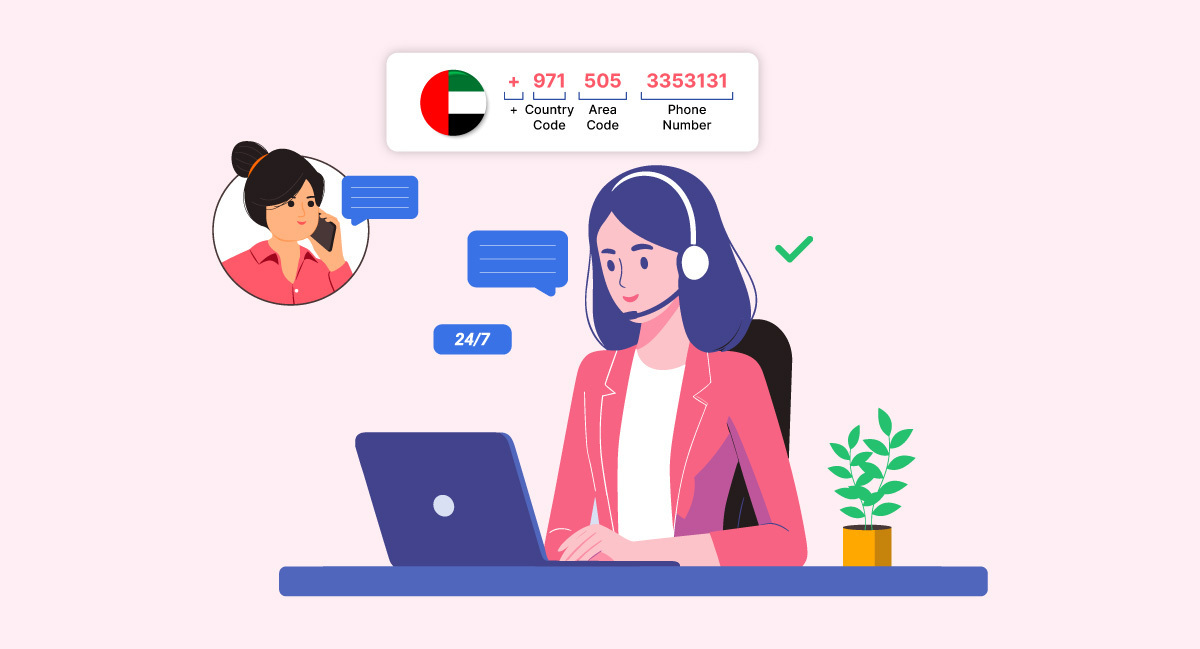
Growing a business in the UAE puts you in a fast and competitive landscape. Customers expect quick communication, reliable support, and a real sense of care. A virtual call center gives you that advantage because it enables your team to handle customer calls from anywhere while still creating a consistent and professional experience.
If you are exploring this route for your company, below is a simple, practical guide that walks you through the setup process. It covers the essential steps, the key decisions, and the elements that can elevate your customer support in the UAE market.
Step 1: Understand What a Virtual Call Center Means for a UAE Business
A virtual call center is a cloud-based customer support setup that allows your team work from any location. You get communication tools, call routing features, and support management functions in an arrangement that doesn’t require a physical office space. This structure helps small businesses scale, helps medium-sized companies cut costs, and helps large organizations distribute teams across multiple regions.
In the UAE, this model suits sectors like e-commerce, logistics, healthcare, hospitality, and financial services. The region’s digital-first business climate already favors companies that respond quickly to customers.
At this stage, it also helps to look at service providers in the UAE who already run established support operations. Back Office FZ LLC offers outsourced call center services that give you trained agents, high-quality call management tools, and streamlined processes in line with local commercial expectations. Once you have clarity on what a virtual call center can deliver, you can plan the structure, resources, and tools that fit your goals.
Step 2: Choose the Right Call Center Software and Infrastructure
Your software will decide your daily workflow, so your selection needs serious attention. For a UAE business, you should look for platforms that comply with local data regulations and support smooth operations during high call volumes.
Look for these essential features:
- Smart call routing: This directs callers to the right agent. It reduces frustration and improves resolution times.
- Interactive Voice Response technology: This filters concerns before a call reaches an agent. It helps your team focus on more complex issues.
- CRM integration: This connects call histories, customer records, and service notes in a single view. Your team can sound informed every time they speak with a customer.
- Call recording and monitoring: This helps you track performance and improve quality over time.
- Scalability: Your system must grow with your business so you’re not forced to switch platforms every few months.
Cloud-based systems are usually the most practical because they remove the need for expensive hardware. They also match the fast-moving environment of the UAE, where businesses expand quickly.
Step 3: Register the Right Licenses and Ensure UAE Compliance
Even a virtual call center must follow the proper regulations. If your business is based in Dubai, Abu Dhabi, Sharjah, or any of the free zones, check the commercial activity required for customer support operations. Many companies choose free zones like Dubai Internet City or Dubai Outsource City for flexibility, cost effectiveness, and digital-focused approvals.
Data protection requirements also matter. The UAE has strict expectations around customer confidentiality and handling of personal information. Your software provider and your internal processes must follow these rules, especially if you store or process customer records.
If you work with an outsourcing partner, confirm that their infrastructure aligns with UAE compliance standards. This protects your business from legal issues and builds trust with your clients or customers.
Step 4: Build a Skilled Customer Support Team
A virtual setup still relies on human talent. You need agents who understand customer service, phone etiquette, and the cultural nuances of the UAE. The country’s customer base is diverse, so your team should feel confident speaking with people from different backgrounds.
You also need supervisors who know how to manage remote teams. They must monitor performance, review call recordings, and guide agents through difficult situations. A successful virtual call center uses structure, coaching, and accountability as the backbone of its operations.
If you choose in-house hiring, plan a training program that covers product knowledge, communication techniques, call handling, tone management, and scenario-based learning. If you prefer a faster and more streamlined approach, you can rely on outsourcing companies that already have trained agents who can step into your process with minimal onboarding.
Step 5: Set Up Your Communication Protocols and Quality Benchmarks
Your team needs clear rules that define how they speak, what they say, and how they handle each type of customer inquiry. A strong protocol gives your agents confidence because they always know the next step.
Create guidelines for:
- Greeting standards: Set the exact phrasing that starts every call. This creates consistency.
- Call handling steps: Outline how agents should diagnose issues, confirm details, and offer solutions.
- Escalation paths: Give your team clarity on when to hand over a call to a supervisor or specialist.
- Response times: Decide how quickly your team should answer calls, resolve issues, and send follow-up messages.
You also need quality benchmarks. These help you track performance through call monitoring, customer satisfaction surveys, and first contact resolution metrics. A virtual call center becomes more effective when these benchmarks stay visible and updated.
Step 6: Test Your Setup and Launch Gradually
Before you go live, test your system with internal calls. Try different scenarios, test routing rules, and check how the system performs under pressure. Once you feel confident, introduce a soft launch with a small batch of real customers. This gives you time to fix issues before the full rollout.
Your goal is stability. You want customers to feel supported from the first interaction, so a quiet and gradual launch helps you polish the workflow.
Final Thoughts
Setting up a UAE virtual call center does not need to feel overwhelming. You only need the right tools, the right people, and a clear plan. Once the framework stands strong, your business can serve customers with confidence and offer the kind of consistent experience that drives loyalty in the UAE’s competitive market.
And of course, If you want to speed up this process, outsourcing partners like Back Office FZ LLC can take most of the burden off your shoulders and give you a ready-to-use setup that delivers reliable results.


