

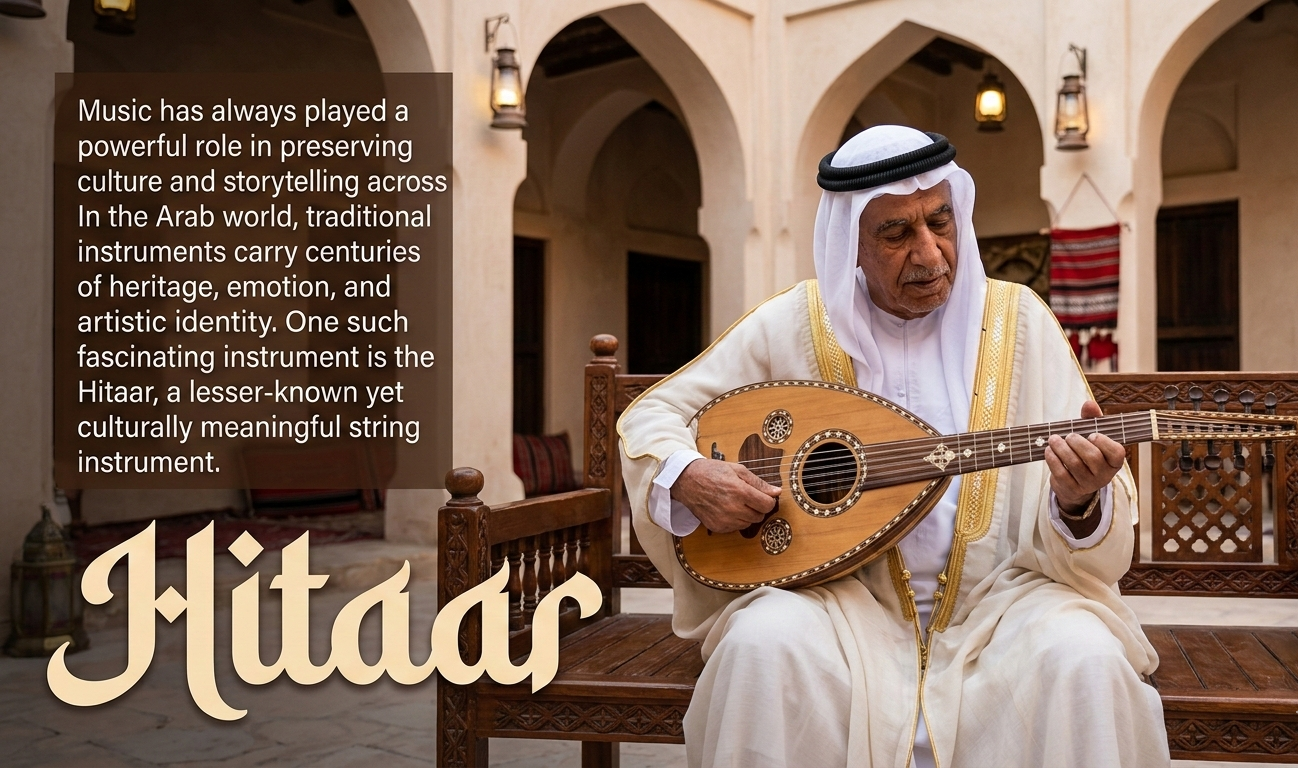
Music has always played a powerful role in preserving culture and storytelling across generations. In the Arab world, traditional instruments carry centuries of heritage, emotion, and artistic identity. One such fascinating instrument is the Hitaar, a lesser-known yet culturally meaningful string instrument.
The Hitaar reflects the deep musical traditions of Middle Eastern societies. Its distinctive sound and craftsmanship make it a symbol of artistic expression and historical continuity. While it may not be as globally recognized as the oud or qanun, the Hitaar holds a special place in traditional performances and regional folk music.
Exploring the story of the Hitaar reveals more than just musical notes—it uncovers the evolution of Arab culture, craftsmanship, and storytelling. Understanding its legacy helps us appreciate how traditional instruments continue to shape modern music.
Origins and Historical Roots of the Hitaar
The history of the Hitaar traces back to the rich musical traditions of the Middle East and North Africa. For centuries, string instruments have played a central role in Arab culture, accompanying poetry, storytelling, and ceremonial gatherings.
Many historians believe the Hitaar evolved from early plucked string instruments used by traveling musicians and poets. These performers carried their instruments across trade routes, spreading musical influences between regions. Over time, these influences helped shape the Hitaar into a distinct instrument.
Unlike some instruments that emerged through formal music institutions, the Hitaar developed naturally through community traditions. Rural performers, folk musicians, and cultural storytellers helped refine its structure and playing style.
The instrument also gained popularity in intimate musical gatherings, where artists would perform for small audiences. These performances allowed the emotional depth of the Hitaar’s sound to resonate closely with listeners.
Although documentation about the instrument remains limited, oral traditions and cultural references suggest that the Hitaar has been part of Arab musical heritage for generations.
Physical Structure and Design of the Hitaar
The beauty of the Hitaar lies not only in its sound but also in its craftsmanship. Traditional versions of the instrument are handmade by skilled artisans who dedicate years to perfecting their craft.
Most Hitaar instruments feature a wooden body carefully carved from hardwood. The choice of wood greatly influences the resonance and tone produced by the instrument. Artisans often select woods known for durability and rich acoustic qualities.
The instrument typically includes several strings stretched across the body and attached to tuning pegs. These strings produce melodic tones when plucked or strummed.
Another defining element is the neck of the instrument, which allows musicians to adjust pitch and create expressive melodies. Some versions include decorative carvings or cultural patterns, reflecting regional artistic traditions.
Crafting a Hitaar requires patience and precision. Each instrument carries subtle variations depending on the artisan’s style and the musical traditions of the region where it was made.
For many craftsmen, building a Hitaar is not just a profession but a way of preserving cultural heritage.
The Unique Sound and Musical Character
One of the most captivating features of the Hitaar is its warm, expressive sound. The instrument produces soft yet resonant tones that blend beautifully with other traditional instruments.
Musicians often describe the Hitaar’s sound as deeply emotional. Its tones can shift from gentle and reflective melodies to lively rhythms during festive performances.
Unlike louder orchestral instruments, the Hitaar excels in intimate settings. Its sound creates a close connection between the musician and the audience.
Many performers appreciate the instrument’s versatility. With the right technique, a musician can produce subtle variations in tone, allowing the instrument to convey a wide range of emotions.
Because of this expressive capability, the Hitaar has often accompanied poetic recitations and traditional storytelling.
In many cultural gatherings, the instrument acts almost like a musical narrator, guiding listeners through emotional journeys.
Role of the Hitaar in Arab Cultural Traditions
Traditional instruments often carry deep cultural significance, and the Hitaar is no exception. Throughout history, it has appeared in various cultural celebrations, artistic gatherings, and folk performances.
In some communities, the instrument accompanies traditional songs that celebrate weddings, harvest festivals, and family milestones. These events strengthen social bonds while preserving musical traditions.
Storytellers have also used the Hitaar to enhance their narratives. Soft melodies played in the background help bring stories to life, creating a more immersive experience for audiences.
The instrument also symbolizes cultural continuity. Older musicians frequently teach younger generations how to play it, passing down techniques and musical knowledge.
This generational transfer ensures that the instrument remains part of living tradition rather than becoming a forgotten artifact.
Even today, the Hitaar continues to represent a connection between the past and the present.
Comparison with Other Arab String Instruments
To fully understand the Hitaar, it helps to compare it with other well-known Arab instruments.
The oud, for example, is one of the most famous instruments in Middle Eastern music. It has a rounded body and produces deep, rich tones. While the oud often takes a leading role in classical compositions, the Hitaar typically appears in more localized or folk settings.
Another instrument is the qanun, a large zither-like instrument played on a flat surface. Its sound is bright and intricate, quite different from the softer tone of the Hitaar.
The rebab, a bowed string instrument, also shares historical connections with traditional music. However, the rebab’s sound is produced with a bow rather than plucking strings.
These differences highlight the diversity of Arab musical traditions. Each instrument contributes a unique voice to the musical landscape.
The Hitaar’s charm lies in its simplicity and emotional resonance rather than technical complexity.
The Hitaar in Modern Musical Exploration
While deeply rooted in tradition, the Hitaar has also begun appearing in modern musical experiments. Contemporary musicians often explore ways to blend traditional instruments with modern genres.
Some artists incorporate the Hitaar into fusion music, combining it with electronic beats or global musical styles. This approach introduces the instrument to new audiences who may not be familiar with traditional Arab music.
Music festivals focused on cultural heritage also help revive interest in rare instruments like the Hitaar. These events provide platforms for musicians who specialize in traditional performance styles.
Educational programs and cultural organizations have also started documenting lesser-known instruments. These efforts ensure that knowledge about the Hitaar does not disappear over time.
Although it remains relatively rare compared to mainstream instruments, the Hitaar continues to inspire curiosity among musicians and researchers alike.
Craftsmanship and the Art of Instrument Making
Building a Hitaar is an art form that requires both technical skill and cultural understanding. Traditional instrument makers often learn their craft through apprenticeships.
These artisans carefully select materials that enhance the instrument’s sound quality. The carving of the wooden body must be precise to create proper resonance.
The placement of strings, tuning pegs, and structural components also requires careful measurement. Even small adjustments can influence how the instrument sounds.
Many craftsmen also decorate the instrument with cultural motifs. These artistic details reflect regional heritage and personal craftsmanship.
In some workshops, instrument making remains a family tradition passed down through generations.
For these artisans, every Hitaar they create represents a piece of cultural history.
Preserving the Legacy of the Hitaar
Traditional instruments face challenges in the modern era, especially as digital music and mass-produced instruments dominate the industry.
However, cultural preservation efforts are helping protect instruments like the Hitaar. Museums, music schools, and cultural organizations are documenting traditional craftsmanship and musical techniques.
Workshops and cultural festivals also encourage young musicians to explore heritage instruments. Learning to play the Hitaar allows new generations to connect with their cultural roots.
Online platforms have also made it easier for musicians to share recordings and educational content. Through digital media, rare instruments can reach global audiences.
Preserving the Hitaar is not only about protecting an instrument—it is about maintaining a living connection to centuries of musical tradition.
FAQs
What is the Hitaar instrument?
The Hitaar is a traditional Arab string instrument known for its melodic and expressive sound. It has historical roots in Middle Eastern musical traditions and is often used in folk performances and cultural gatherings.
How is the Hitaar played?
The instrument is typically played by plucking or strumming its strings with the fingers or a small plectrum. Musicians use the neck of the instrument to adjust pitch and create melodic variations.
Is the Hitaar similar to the oud?
While both are string instruments from the Arab world, they differ in design and sound. The oud has a larger rounded body and a deeper tone, while the Hitaar often produces softer and more intimate melodies.
Why is the Hitaar important in Arab culture?
The Hitaar represents traditional musical heritage and storytelling. It has been used in cultural celebrations, poetry performances, and folk music for generations.
Is the Hitaar still used today?
Yes, although it is less common than other instruments. Some traditional musicians and cultural preservation groups continue to perform and teach the instrument.
Conclusion
The Hitaar stands as a fascinating symbol of Arab musical heritage. Its craftsmanship, sound, and cultural meaning reflect centuries of artistic expression and storytelling.
Although it remains less widely known than other traditional instruments, the Hitaar continues to capture the imagination of musicians and historians alike. Its gentle melodies remind listeners of the deep connection between music and cultural identity.
As preservation efforts grow and modern artists rediscover traditional instruments, the legacy of the Hitaar has the potential to reach new audiences around the world.
Exploring instruments like the Hitaar helps us appreciate the richness of global musical traditions and the timeless power of sound.
Stay in touch to get more updates & alerts on Technofeed! Thank you


