

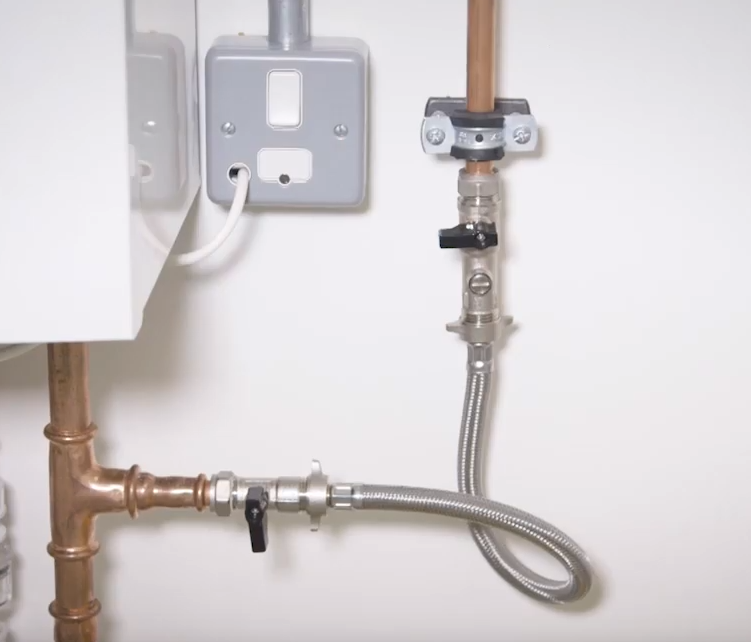
A boiler filling loop lets you top up system pressure by linking the mains to the heating circuit. Used well, it keeps the boiler happy; used badly, it can cause leaks, lock-outs and safety issues.
- What it does: Connects the mains supply to the heating system so you can re-pressurise the boiler — typically to 1.0–1.5 bar when cold.
- Why it matters: Correct pressure helps the boiler run efficiently and prevents nuisance shut-downs.
- When it goes wrong: Using the loop while the boiler is hot, loose connections, opening valves too fast, leaving an external loop attached, or relying on top-ups to mask deeper faults.
- Good practice: Switch the boiler off and let it cool, connect both ends securely, open valves slowly while watching the gauge, stop at target pressure, then disconnect external loops.
- What to do next: If pressure keeps dropping or you’re unsure, ask a Gas Safe registered engineer to check for leaks, expansion-vessel faults or PRV issues.
Benefits at a glance
Stable heating performance
Keeping pressure in range helps radiators warm evenly and avoids lock-outs.
Safer operation
Disconnecting external loops after use reduces the risk of backflow into the mains.
Fewer leaks and call-outs
Sound connections and healthy hoses/valves cut the chance of drips and water damage.
Simple maintenance
A quick visual check of hoses, washers and valves at each service can prevent headaches later.
Faster fault-finding
If you’re topping up often, that’s a clue to investigate the real cause rather than repeatedly repressurising.
Common mistakes to avoid
- Trying to top up while the boiler is on or still hot
- Not tightening or seating both hose ends and isolation valves properly
- Opening valves too quickly and overshooting the correct pressure
- Leaving an external filling loop connected after use (backflow risk)
- Using a worn hose or seized valves instead of replacing them
- Re-pressurising frequently without finding the underlying fault
FAQs
What pressure should I aim for when topping up?
For most domestic boilers, when cold, 1.0–1.5 bar. Check your manual for the exact figure.
Can I leave the filling loop connected for convenience?
No. External loops should be disconnected after use to avoid backflow risk and possible water-regulation issues.
My filling loop leaks — should I tighten it or replace it?
Replace. Ageing hoses, washers and valves often won’t seal reliably even if tightened. A new loop is the safer long-term fix.
Which is better: an external hose or an internal filling key?
Both can be safe when fitted and used correctly. Internal systems are neat and less prone to backflow; external hoses offer flexibility but require careful connection and removal.
How often should I need to repressurise?
Rarely. More than once or twice a year suggests a leak, a failing expansion vessel or a PRV problem. Ask a Gas Safe registered engineer to investigate.
Need help choosing the right filling loop or key?
Talk to our technical team for plain-English advice on selection and safe use.
WhatsApp (badge): https://wa.me/447834398673
Contact us: Contact Us | National Boiler Spares
Always use a Gas Safe registered engineer for diagnosis, installation and repair.


