

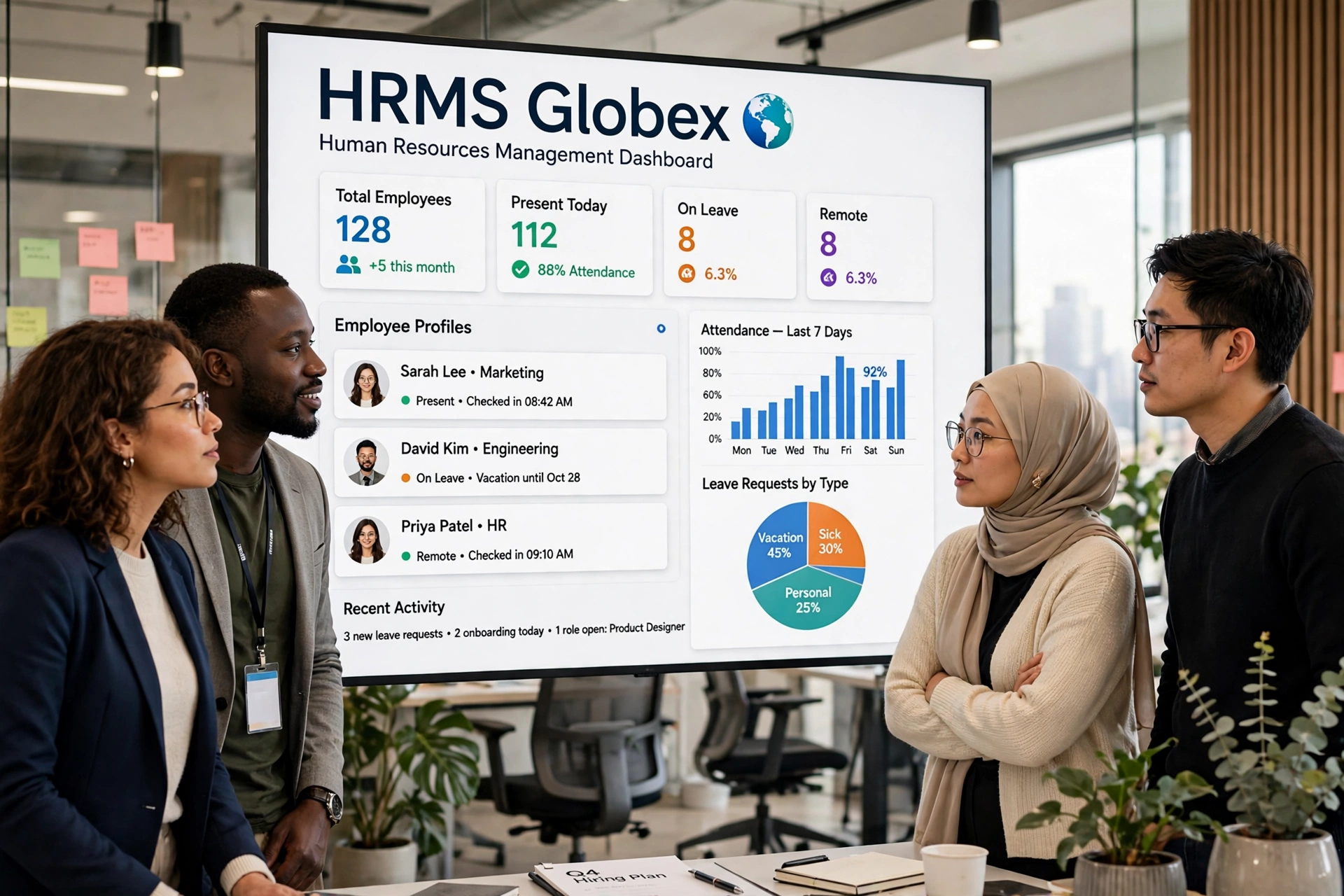
Managing people is one of the most important jobs in any business, but it is also one of the most time-consuming. Attendance tracking, payroll processing, leave approvals, and employee records can quickly fill up an HR team’s day with repetitive work.
This is where HRMS Globex comes into the picture. It is a web-based Human Resource Management System that brings everyday HR tasks together in one online place. If you have seen this name while searching for HR software and want a clear, simple explanation, this guide will help you understand what HRMS Globex is, how it works, and what to check before you use it.
What Is HRMS Globex?
HRMS Globex is an online HR portal designed to support common human resource activities through a central system. Instead of managing employee details in separate spreadsheets, emails, paper files, and chat messages, HR teams can organise that information in one structured platform.
In a system like this, employees can usually view their own basic information, submit requests, and check important documents. At the same time, HR managers and administrators can handle employee records, approvals, and routine workflows from a single dashboard.
It is important not to confuse HRMS Globex with CME Globex. CME Globex is an electronic trading platform run by CME Group and has nothing to do with HR software. The HRMS discussed here is the HR portal linked with hrms.theglobex.com.
A Note on Accuracy
Public information about HRMS Globex is limited compared with larger, well-known HR software brands. Details such as pricing, integrations, and the exact feature list may change or may not be publicly available.
So, think of the features explained below as a practical guide to how a system like HRMS Globex generally works, rather than a confirmed list of every official feature. Before making a final decision, always verify the details directly with the provider.
What Is an HRMS Used For?
Before we look closer at HRMS Globex, it helps to understand the basic idea behind an HRMS.
People often use three similar terms: HRIS, HRMS, and HCM. They sound alike, but they cover different levels of HR work:
- HRIS (Human Resource Information System) mainly stores and organises employee information.
- HRMS (Human Resource Management System) adds daily workflows such as attendance, leave, payroll support, and employee self-service.
- HCM (Human Capital Management) is broader and can also include talent management, workforce planning, performance reviews, and HR analytics.
In short, an HRMS focuses on the practical, day-to-day work of managing employees.
Core Areas an HRMS Usually Handles
Employee records and data management: A central database keeps personal details, job roles, departments, contact information, and employment history in one place. This reduces the need for multiple spreadsheets and paper files.
Attendance and time tracking: HR systems help record working hours and attendance. Employees and managers can often review attendance history through their own dashboards.
Leave and absence management: Employees can apply for leave online, check their remaining balance, and track the status of their request. Managers can approve or reject requests through a clear workflow.
Payroll support: Some HRMS platforms include payroll tools, while others connect with separate payroll software. When attendance and payroll data are linked, it can reduce manual calculations and errors.
Document and records storage: Contracts, company policies, employee forms, and other HR documents can be stored digitally, making them easier to find and manage.
Who Is HRMS Globex For?
HRMS Globex can be useful for organisations that want to move away from manual HR work and adopt a more organised digital process. It may be especially helpful for:
- Small and mid-sized businesses that have outgrown spreadsheets and paper-based systems.
- Growing companies that need a consistent way to manage employee data as their team expands.
- HR administrators and managers who regularly deal with attendance, leave, records, and approvals.
- Employees who want easy access to their own HR information without waiting for HR staff for every small request.
In the end, the right choice depends on your company size, team structure, budget, and daily HR needs.
Key Features and Benefits of HRMS Globex
Centralised Employee Information: The biggest advantage of an HRMS is centralisation. When all employee information lives in one system, HR staff do not have to search through different files and emails. This saves time, improves consistency, and makes routine work much faster.
Streamlined Leave and Attendance Workflows: Think about a company where leave requests come through email, phone calls, or verbal messages. HR then has to record each request manually and update balances by hand. A digital workflow changes this completely. An employee submits a request online, the manager reviews it, and the system updates the record automatically. Everyone can see a clear history of what was approved and when.
Employee Self-Service: Self-service is one of the most useful features of a modern HRMS. Instead of contacting HR for every small question, employees can check their attendance, view leave balances, submit requests, and access documents on their own. This gives employees more control and allows HR teams to focus on more important work, such as hiring, training, and employee support.
Better Accuracy and Fewer Manual Errors: Manual data entry often leads to mistakes. A missed attendance entry, a wrong leave balance, or a duplicate employee record can create extra work later. A central HR system reduces many of these manual steps. However, automation alone is not enough. The system still needs correct setup, regular checks, and accurate data to work well.
Time and Cost Savings: When HR teams spend less time searching for records and updating spreadsheets, they can focus on work that truly adds value. This includes recruitment, onboarding, compliance, employee engagement, and training. The exact savings will depend on how much manual work the system replaces, but for many businesses, the time saved is significant.
Things to Keep in Mind Before Adopting HRMS Globex
Choosing an HR system is a big decision because it will hold sensitive employee information. Before you adopt HRMS Globex, consider these points:
Verify functionality directly: Ask the provider for a live demo or a detailed feature list, especially if you need specific payroll, attendance, or reporting tools.
Check pricing carefully: Do not rely only on third-party websites for pricing. Ask for a written quote that clearly explains setup costs, subscription charges, and any extra fees.
Review data security and compliance: Ask where data is stored, who can access it, what security measures are in place, and how the system handles privacy and employment rules.
Confirm integration needs: If you already use accounting, payroll, or attendance software, check whether HRMS Globex can work smoothly with those tools.
Consider user adoption: Even a good system can fail if employees find it hard to use. Plan proper training and support before rolling it out to the whole team.
How HRMS Globex Compares to Alternatives
When researching HRMS Globex, you may also come across popular platforms such as BambooHR, ADP, and Zoho People. These are established providers with different features, pricing models, and target customers.
BambooHR is popular among growing businesses, ADP is known for large-scale payroll and workforce services, and Zoho People works well for companies already using other Zoho tools.
The best choice is not always the system with the most features. The right question is: does it reliably support the HR processes your business actually needs every day?
Getting Started: A Practical Checklist
If you are considering HRMS Globex, follow these simple steps:
- List your essential requirements and the HR processes you need from day one.
- Request a live demo to see how the system works in real life.
- Ask for a detailed, written quote with all costs included.
- Review security, data storage, backups, and privacy practices.
- Test the system with a small team before a full rollout.
- Plan training and onboarding for HR staff, managers, and employees.
Frequently Asked Questions
What exactly is HRMS Globex? HRMS Globex is a web-based Human Resource Management System that helps organisations manage everyday HR tasks through an online portal, including employee information, attendance, leave, and related workflows.
Is HRMS Globex the same as CME Globex? No. CME Globex is a financial trading platform and is completely unrelated to HR software. The similar name often causes confusion, but they serve very different purposes.
How do I log in to HRMS Globex? Login access is usually managed by your employer or HR administrator. If your organisation uses this portal, you should receive your login details from them. If you forget your credentials, contact your HR or system administrator first.
How much does HRMS Globex cost? Public pricing information may vary and may not reflect your organisation’s actual requirements. The safest approach is to contact the provider and request a quote based on your team size and needs.
Is HRMS Globex suitable for small businesses? Yes, it can be useful for small businesses moving away from manual processes. However, suitability depends on company size, budget, required features, and total cost, so compare it carefully with your actual needs.
Final Thoughts
HRMS Globex is designed to make workforce management simpler by bringing employee information and HR processes into one central digital system. For businesses tired of spreadsheets and manual HR work, it can be a practical step toward better organisation.
Still, the most important step is to separate general HRMS features from features confirmed for this specific platform. A live demo, a clear pricing quote, strong security checks, and a small pilot test will help you make a confident decision.
Stay in touch to get more updates & alerts on Technofeed! Thank you


