
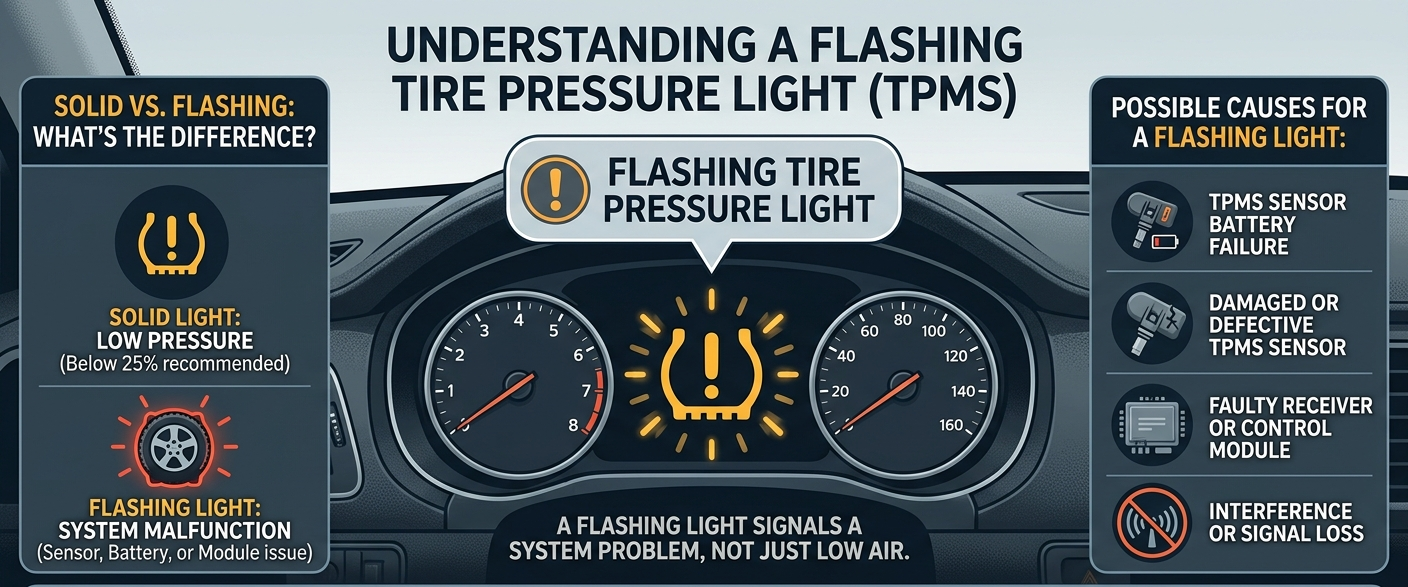
A flashing tire pressure light can catch any driver off guard, especially when everything seems normal at first glance. Many people assume it only means a low tire, but the warning can point to several issues hiding beneath the surface. Ignoring it may affect your vehicle’s safety, fuel economy, and overall driving performance.
Modern cars rely on tire pressure monitoring systems (TPMS) to keep drivers informed about tire conditions in real time. When the warning light flashes instead of staying solid, it usually signals something more serious than simple air loss. Understanding the difference can help you avoid expensive repairs and dangerous road situations.
Whether you drive daily for work, road trips, or family errands, knowing how to respond to this warning matters. Here’s everything you need to know about a flashing tire pressure light and what it actually means.
Understanding How the Tire Pressure Monitoring System Works
Most modern vehicles come equipped with a Tire Pressure Monitoring System, commonly known as TPMS. This system constantly checks the air pressure in your tires and alerts you when something falls outside the recommended range.
There are generally two types of TPMS systems used in vehicles today:
Direct TPMS
Direct TPMS uses sensors installed inside each tire. These sensors measure actual air pressure and send the information to your vehicle’s computer. If one tire drops below the recommended PSI, the warning light activates.
Indirect TPMS
Indirect systems work differently. Instead of physical pressure sensors, they use wheel speed data from the ABS system. When one tire rotates differently because of pressure changes, the system triggers a warning.
A solid TPMS light often indicates low tire pressure. However, a flashing tire pressure light usually means the system itself has detected a malfunction.
What a Flashing Tire Pressure Light Usually Means
A flashing tire pressure light is different from a steady warning light. In most vehicles, the light flashes for around 60 to 90 seconds before staying solid. This pattern typically points to a TPMS system fault.
Many drivers panic and immediately assume they have a flat tire. While low pressure can contribute, flashing warnings often involve sensor communication problems or electronic failures.
Here are the most common meanings behind the flashing warning:
Faulty TPMS Sensor
The most frequent cause is a damaged or dead tire pressure sensor. TPMS sensors contain small batteries that usually last between 5 to 10 years. Once the battery dies, the sensor stops communicating with the car’s computer.
Sensor Relearning Issue
Sometimes the sensors lose synchronization after tire rotation, replacement, or wheel alignment. The vehicle may need a TPMS reset or relearn procedure.
Extreme Weather Changes
Cold temperatures can rapidly lower tire pressure overnight. In winter, many drivers notice the light appearing during early morning starts. While this often causes a solid warning light, severe fluctuations may trigger system confusion.
Electrical or Wiring Problems
Damaged wiring, corroded connections, or control module issues can also interfere with the TPMS system.
Aftermarket Tires or Wheels
Some aftermarket wheels may not support factory TPMS sensors correctly. This can lead to recurring flashing warnings even if tire pressure is normal.
Common Signs That Accompany a Flashing TPMS Light
A flashing tire pressure light rarely appears alone. Your vehicle may show additional symptoms depending on the root problem.
Inconsistent Tire Pressure Readings
You may notice one tire displaying unrealistic pressure numbers or no reading at all.
Warning Light Appears After Starting the Car
Many vehicles flash the TPMS light immediately after ignition. After about a minute, the light may remain solid.
Sudden Loss of Tire Pressure
If the warning appears alongside steering instability or vibration, inspect the tires immediately for punctures or leaks.
Dashboard Error Messages
Some newer vehicles display messages like “TPMS System Fault” or “Check Tire Pressure Monitoring System.”
A friend once ignored a flashing TPMS light for nearly two weeks because the car “felt fine.” During a highway trip, one tire suddenly lost pressure due to a slow puncture. Fortunately, the issue was caught before a blowout happened. That small dashboard warning likely prevented a dangerous accident.
Why You Should Never Ignore the Warning
Many drivers continue driving after seeing the warning light because the vehicle still operates normally. That can be a costly mistake.
Reduced Fuel Efficiency
Underinflated tires increase rolling resistance, forcing the engine to work harder and consume more fuel.
Uneven Tire Wear
Incorrect tire pressure causes premature wear along the edges or center of the tire tread. This shortens tire lifespan significantly.
Poor Handling and Braking
Improper tire pressure affects steering response, traction, and braking distance, especially during rain or emergency stops.
Increased Risk of Tire Failure
Driving with dangerously low pressure can overheat the tire, increasing the risk of a blowout.
Hidden Safety Problems
Sometimes the flashing light indicates system failure, meaning your vehicle may no longer warn you about actual pressure loss.
Ignoring the issue removes an important layer of driving safety that modern vehicles are designed to provide.
How to Fix a Flashing Tire Pressure Light
The correct fix depends on the underlying cause. Fortunately, many TPMS issues can be diagnosed quickly.
Check Tire Pressure Manually
Start by checking all four tires with a reliable tire pressure gauge. Compare the readings with the recommended PSI listed inside the driver’s door frame.
Inflate Tires Properly
If any tire is low, inflate it to the correct level. Avoid overinflation, which can also create handling issues.
Reset the TPMS System
Some vehicles have a TPMS reset button located under the steering wheel or inside the glove compartment. Hold the button until the warning light blinks several times.
Drive for Sensor Recalibration
Certain vehicles automatically relearn sensor positions after driving for several miles at consistent speeds.
Replace Faulty Sensors
If a sensor battery has died, replacement is often necessary. Most tire shops can scan and identify defective sensors within minutes.
Inspect for Tire Damage
Check for nails, punctures, cracked valve stems, or visible tire damage that could cause slow leaks.
Visit a Professional Mechanic
If the warning continues despite proper tire pressure, a professional diagnostic scan may be needed to inspect the TPMS module or wiring.
Can Weather Trigger a Flashing Tire Pressure Light?
Yes, weather changes can absolutely affect your TPMS system. Cold air causes tire pressure to drop naturally. For every 10-degree temperature decrease, tire pressure can fall by approximately 1 PSI.
This explains why many people notice the warning during winter mornings.
Winter Temperature Drops
Cold weather often causes temporary low-pressure warnings. Once the tires warm up during driving, the pressure may stabilize.
Heat Expansion
In hot climates, tires expand as temperatures rise. Overinflation during summer can also trigger warnings.
Seasonal Tire Swaps
Switching between winter and summer tires sometimes disrupts sensor communication if additional TPMS sensors were not installed properly.
Keeping tires properly inflated year-round helps reduce seasonal warning issues.
How Much Does TPMS Repair Cost?
Repair costs vary depending on the problem and vehicle model.
Basic Tire Inflation
This is usually free at many gas stations or service centers.
TPMS Reset
A simple system reset may cost little to nothing if done during routine maintenance.
Sensor Replacement
Replacing one TPMS sensor typically costs between $50 and $150, including labor.
Full TPMS Module Repair
If the central control module fails, repair costs can become more expensive, especially in luxury vehicles.
Although repairs may seem inconvenient, addressing TPMS issues early often prevents larger tire-related expenses later.
Tips to Prevent Future TPMS Problems
Preventive maintenance goes a long way toward avoiding recurring warning lights.
Check Tire Pressure Monthly
Even with TPMS installed, manual checks remain important.
Replace Sensors During Tire Changes
If your sensors are approaching the end of their lifespan, replacing them during tire installation saves labor costs later.
Avoid Harsh Impacts
Potholes and curb hits can damage sensors and valve stems.
Use Compatible Wheels
When purchasing aftermarket wheels, confirm they support your vehicle’s TPMS system.
Keep Tires Properly Maintained
Regular tire rotations, balancing, and alignments improve tire health and sensor reliability.
FAQs
Why is my tire pressure light flashing but my tires are fine?
A flashing tire pressure light usually indicates a TPMS system malfunction rather than low tire pressure. Faulty sensors, dead sensor batteries, or communication issues are common causes.
Can I drive with a flashing tire pressure light?
You can usually continue driving for a short period, but you should inspect the tires immediately. Ignoring the warning may lead to unsafe driving conditions or unnoticed tire pressure loss.
How do I reset my flashing TPMS light?
Check and adjust all tire pressures first. Then use your vehicle’s TPMS reset button or drive the vehicle for several miles so the system can recalibrate automatically.
Does cold weather cause TPMS warnings?
Yes, cold temperatures reduce tire pressure naturally. During winter, TPMS warnings become more common because air contracts inside the tires.
How long do TPMS sensors last?
Most TPMS sensors last between 5 and 10 years. Their internal batteries eventually die and require sensor replacement.
Conclusion
A flashing tire pressure light is more than a minor dashboard annoyance. It often signals a problem within the tire pressure monitoring system itself, and ignoring it can compromise both safety and performance. From faulty sensors to seasonal temperature changes, several factors can trigger the warning.
The good news is that most TPMS issues are manageable when addressed early. Regular tire maintenance, proper inflation, and timely inspections can prevent bigger problems down the road. Paying attention to small warnings today can save you from expensive repairs and dangerous situations tomorrow.
Your tires are the only part of the vehicle touching the road, so keeping them in top condition should never be overlooked.
Stay in touch to get more updates & alerts on site! Thank you