
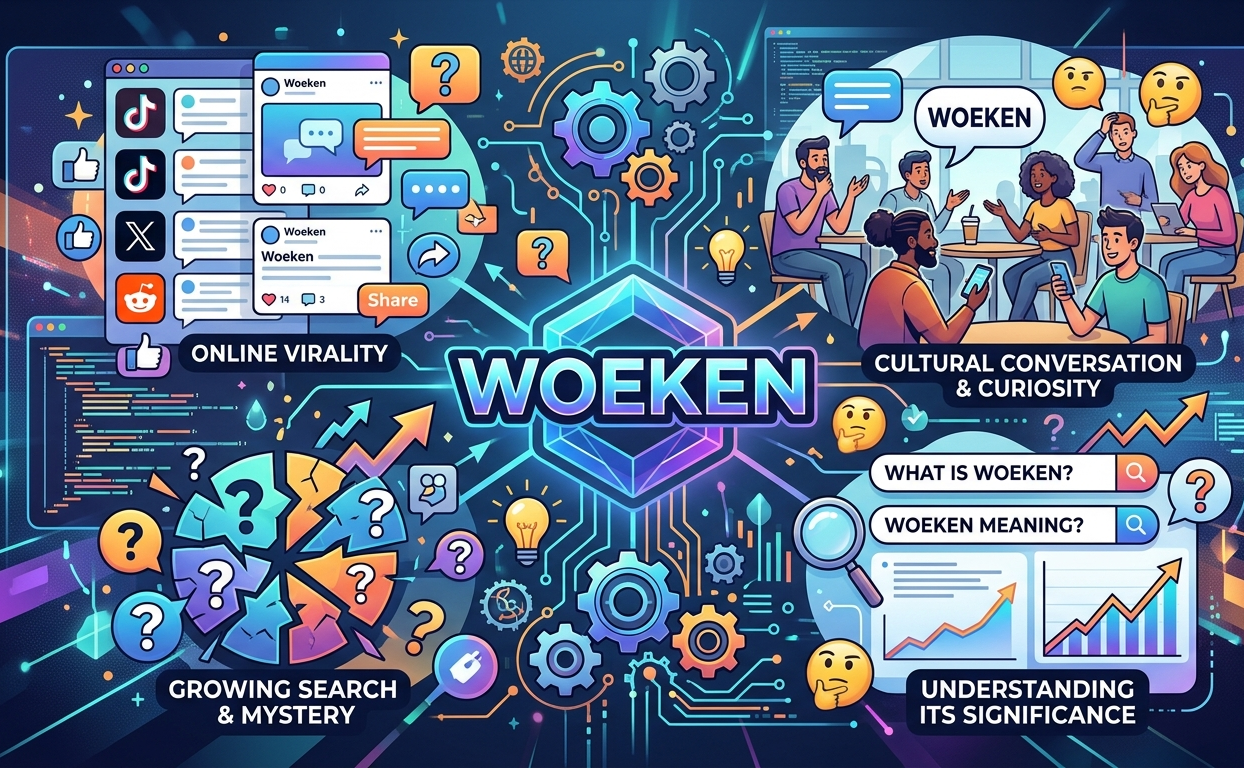
Every so often, a word appears out of nowhere and starts showing up everywhere—on social media, in conversations, and across online communities. “Woeken” is one of those intriguing terms that has sparked curiosity and debate.
At first glance, it might seem like just another internet slang word, but its growing popularity suggests something deeper. People are not just using it—they’re trying to understand it.
So, what exactly does “Woeken” mean, and why has it suddenly become a talking point? Let’s break it down in a way that actually makes sense.
What Does Woeken Mean?
The meaning of “Woeken” isn’t fixed, which is exactly why it has gained attention. In most contexts, it’s used as an expressive term—something that captures a feeling, reaction, or moment that’s hard to describe with traditional words.
Think of it as a blend of curiosity, surprise, and emphasis. When someone says “Woeken,” they’re often reacting to something unexpected or noteworthy.
In casual conversations, it can function like:
- “Wow, that’s interesting.”
- “That’s unexpected.”
- “I didn’t see that coming.”
Its flexibility is what makes it powerful. People can shape its meaning based on tone, context, and intention.
The Origin of Woeken
Unlike traditional words with clear linguistic roots, “Woeken” appears to have emerged from online culture. It likely started as a niche term within smaller communities before spreading to wider audiences.
Many internet-born words follow this pattern. A word gets coined in a specific group—gamers, meme creators, or social media users—and then slowly gains traction.
“Woeken” seems to follow that same path. While its exact origin is still debated, its rise reflects how language evolves in the digital age.
Interestingly, the lack of a clear origin has only added to its appeal. People enjoy using words that feel new, undefined, and slightly mysterious.
Why Woeken Is Trending Right Now
There’s always a reason why a word suddenly becomes popular, and with “Woeken,” several factors are at play.
First, social media thrives on novelty. A unique word grabs attention faster than a familiar one. “Woeken” stands out because it sounds unusual yet easy to say.
Second, people are drawn to words that express complex emotions quickly. Instead of explaining a reaction in detail, a single word like “Woeken” can do the job.
Finally, curiosity fuels its spread. When users see a term they don’t understand, they search for it, ask about it, and eventually start using it themselves.
That cycle—confusion, curiosity, adoption—is exactly how trends are born.
How People Use Woeken in Daily Conversations
Casual Conversations
In everyday chats, “Woeken” is often used as a reaction. Someone shares surprising news, and the response might simply be, “Woeken, that’s wild.”
It adds personality to conversations without requiring long explanations.
Social Media Posts
On platforms like Twitter, TikTok, or Instagram, brevity matters. “Woeken” fits perfectly into captions, comments, and hashtags.
For example:
“Just saw the ending of that series… Woeken.”
It creates intrigue while keeping things short and engaging.
Humor and Memes
Memes rely heavily on relatable reactions, and “Woeken” works well in that space. It can highlight irony, exaggeration, or unexpected twists in a humorous way.
The Cultural Impact of Woeken
Language reflects culture, and “Woeken” is a perfect example of that relationship. It shows how modern communication values speed, creativity, and emotional nuance.
In a fast-paced digital environment, people prefer words that are quick yet expressive. “Woeken” meets that need by acting as a shorthand for complex reactions.
It also highlights how communities shape language. A word doesn’t need official recognition to become meaningful—it just needs consistent use.
Over time, terms like “Woeken” can influence broader communication trends, especially among younger audiences who adopt new expressions quickly.
Is Woeken Just a Trend or Here to Stay?
Not every trending word lasts, and it’s fair to question whether “Woeken” will fade away or become a lasting part of modern vocabulary.
Some words disappear as quickly as they appear, especially if they rely solely on novelty. Others stick around because they fill a gap in language.
“Woeken” has the potential to last because of its flexibility. It isn’t tied to a single meaning or situation, which gives it room to evolve.
However, its future depends on continued usage. If people keep finding new ways to use it, it could become more than just a passing trend.
How to Use Woeken Naturally
Using a new word can feel awkward at first, but “Woeken” is surprisingly easy to integrate into everyday language.
Start by using it in informal settings. It works best in relaxed conversations where tone and context are flexible.
Pay attention to how others use it. This helps you understand its nuances and avoid using it in the wrong context.
Most importantly, don’t force it. Words like “Woeken” are meant to feel natural, not scripted. If it fits the moment, use it—if not, let it be.
Common Misunderstandings About Woeken
One common misconception is that “Woeken” has a strict definition. In reality, its meaning is fluid and depends heavily on context.
Another misunderstanding is that it’s just meaningless slang. While it may seem that way, it actually serves a purpose—helping people express reactions quickly and creatively.
Some also assume it’s limited to younger audiences. While it’s more popular among them, anyone can use it once they understand how it works.
FAQs
What does Woeken actually mean?
“Woeken” is an expressive term used to react to something surprising, interesting, or unexpected. Its meaning changes based on context and tone.
Where did Woeken come from?
It likely originated from online communities or social media platforms, though its exact source remains unclear.
Is Woeken an official word?
No, it’s not officially recognized in dictionaries yet. However, many widely used words started the same way before becoming mainstream.
How do I use Woeken in a sentence?
You can use it as a reaction. For example: “Woeken, I didn’t expect that result at all.”
Will Woeken stay popular?
It depends on continued usage. If people keep using it creatively, it has the potential to stick around longer than typical trends.
Conclusion
“Woeken” is more than just a random word—it’s a reflection of how language evolves in the digital age. Its rise shows how people seek new ways to express reactions quickly and creatively.
While its meaning may not be fixed, that’s exactly what makes it interesting. It adapts to context, making it both flexible and engaging.
Whether it becomes a lasting part of modern vocabulary or fades over time, its impact is already clear. It has sparked curiosity, conversation, and a new way of expressing the unexpected.
So the next time you come across something surprising, you might just find yourself saying, “Woeken.”
Stay in touch to get more updates & alerts on Technofeed! Thank you