
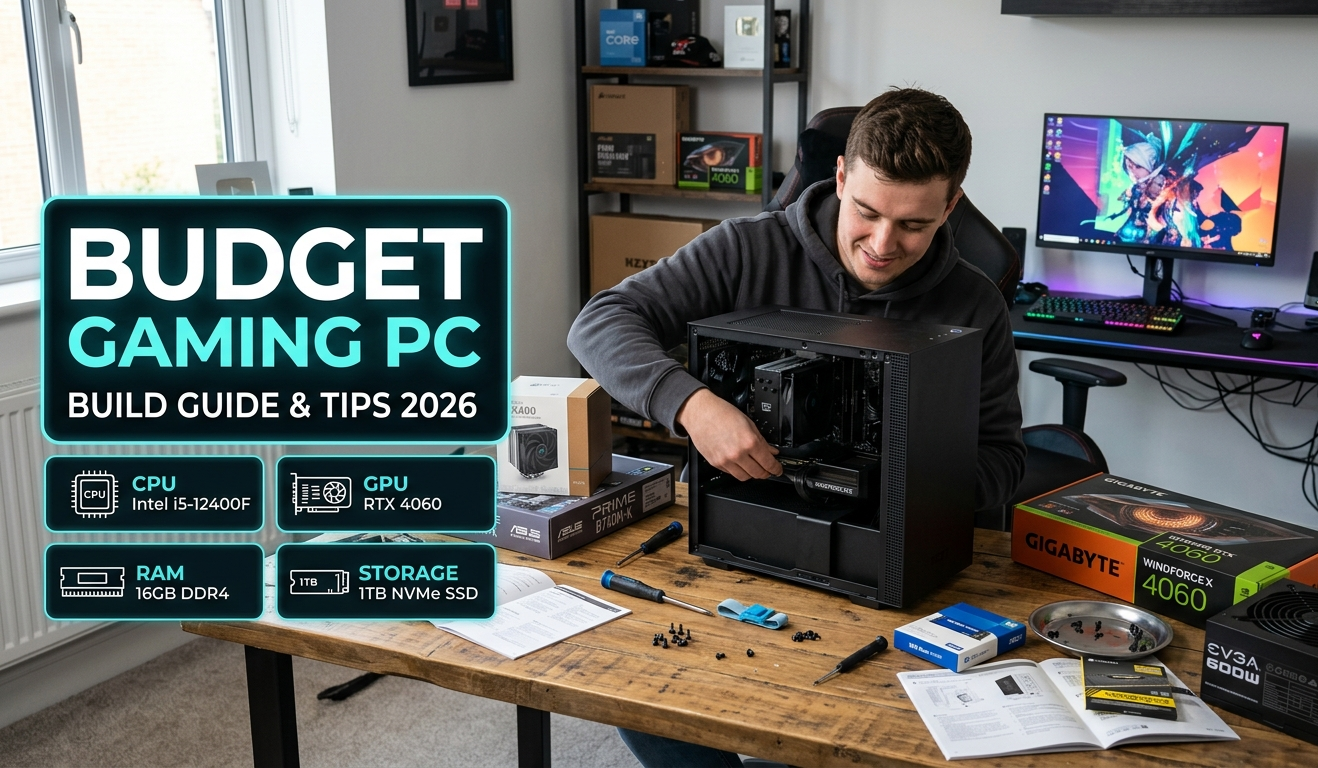
Building a budget gaming PC in 2026 is no longer about compromise—it’s about smart choices. With hardware becoming more efficient and competitive, even mid-range components can deliver impressive performance. Whether you’re stepping into PC gaming for the first time or upgrading from an older setup, there’s never been a better time to build affordably.
I remember helping a friend build his first rig with a tight budget—what surprised us most wasn’t what we had to sacrifice, but how much we could actually achieve. That’s the beauty of modern budget gaming builds.
This guide walks you through practical builds, essential components, and real-world tips to help you get the best performance without overspending.
Why Budget Gaming PCs Are Better Than Ever
The gap between budget and high-end systems has narrowed significantly. Thanks to advancements in CPUs and GPUs, even entry-level components can run modern games smoothly.
Today’s budget gaming PC can handle titles like Fortnite, Valorant, Apex Legends, and even AAA games like Cyberpunk 2077 on optimized settings. Developers are also optimizing games better, making them more accessible to mid-range hardware.
Another reason budget builds shine is upgrade flexibility. You don’t need everything at once. Start small, then upgrade your GPU or RAM later as your needs grow.
Key Components That Matter Most
When building a budget gaming PC, not every component deserves equal attention. Some parts impact performance far more than others.
Processor (CPU)
A strong CPU ensures smooth gameplay and multitasking. Budget favorites in 2026 include AMD Ryzen 5 series and Intel Core i5 entry-level chips. These offer excellent value without bottlenecking your GPU.
Graphics Card (GPU)
This is the heart of any gaming build. Even a modest GPU like an RTX 3050 or RX 6600 can deliver solid 1080p performance. If your budget is tight, consider buying a used GPU from a trusted seller—it’s a common strategy among gamers.
RAM
16GB RAM is now the sweet spot. It keeps games running smoothly while allowing background apps like Discord or browsers to stay open.
Storage
SSDs are no longer optional. A 500GB or 1TB NVMe SSD ensures fast boot times and quick game loading. Trust me, once you switch from HDD to SSD, there’s no going back.
Power Supply (PSU)
Don’t cut corners here. A reliable PSU protects your entire system. Look for 80+ Bronze certification at minimum.
Best Budget Gaming PC Build Under $600
This entry-level build is perfect for beginners or casual gamers.
- CPU: Ryzen 5 5500
- GPU: Radeon RX 6500 XT
- RAM: 16GB DDR4
- Storage: 500GB NVMe SSD
- Motherboard: B450/B550
- PSU: 500W 80+ Bronze
This setup comfortably handles esports titles and older AAA games. You’ll get smooth 1080p performance at medium settings, which is more than enough for most players starting out.
Mid-Range Budget Build Under $900
If you can stretch your budget slightly, this build offers a noticeable jump in performance.
- CPU: Intel Core i5-12400F
- GPU: RTX 3060
- RAM: 16GB DDR4
- Storage: 1TB NVMe SSD
- Motherboard: B660
- PSU: 600W 80+ Bronze
This configuration is a sweet spot. It runs modern AAA games at high settings with stable frame rates. It’s also future-proof for at least 2–3 years without major upgrades.
Smart Ways to Save Money Without Sacrificing Performance
Building a budget gaming PC isn’t just about choosing cheap parts—it’s about choosing wisely.
One trick I’ve seen many builders use is mixing new and used components. A slightly used GPU can save you a significant amount while delivering nearly identical performance.
Another tip is avoiding unnecessary RGB lighting or premium cases. They look nice, but they don’t improve performance.
Also, keep an eye on seasonal sales. Black Friday, end-of-year clearance, and back-to-school deals often bring big discounts on PC parts.
Common Mistakes to Avoid
Even experienced builders make mistakes when working with a tight budget.
One of the biggest errors is overspending on the CPU while neglecting the GPU. For gaming, the GPU matters more.
Another mistake is choosing too little storage. Games today are massive—some exceed 100GB. Running out of space quickly becomes frustrating.
Lastly, don’t ignore airflow. A cheap case with poor ventilation can lead to overheating and reduced performance.
Future-Proofing Your Budget Gaming PC
While “future-proof” is never guaranteed, you can still prepare your system for upgrades.
Choose a motherboard that supports newer CPUs. Opt for extra RAM slots so you can upgrade later. And make sure your power supply can handle a more powerful GPU in the future.
I’ve seen many gamers regret not thinking ahead—they end up replacing half their system instead of just upgrading one part. A little planning now can save a lot later.
Real Gaming Performance Expectations
Let’s be realistic—budget gaming PCs won’t max out every game. But they don’t need to.
At 1080p resolution, most budget builds can achieve:
- 60+ FPS in esports titles (high settings)
- 40–60 FPS in AAA games (medium to high settings)
And honestly, once you’re in the game, the difference between ultra and high settings isn’t as noticeable as you might think. Smooth gameplay always matters more than visual perfection.
FAQs
What is the best budget gaming PC for beginners?
A build under $600 with a Ryzen 5 CPU and entry-level GPU is ideal. It balances affordability and performance while leaving room for upgrades.
Can a budget gaming PC run modern AAA games?
Yes, most budget systems can run modern games at medium or high settings, especially at 1080p resolution. Optimization settings play a big role here.
Is it cheaper to build or buy a gaming PC?
Building is usually cheaper and gives you better control over component quality. Prebuilt PCs often include markup costs.
How long does a budget gaming PC last?
With proper care and occasional upgrades, a budget PC can last 3–5 years comfortably. GPU upgrades extend lifespan significantly.
Do I need a dedicated GPU for gaming?
For serious gaming, yes. Integrated graphics have improved but still fall short for demanding games.
Conclusion
A budget gaming PC in 2026 proves that great gaming doesn’t require a massive investment. With the right components and a bit of planning, you can build a system that delivers smooth, enjoyable gameplay without breaking the bank.
Focus on performance over aesthetics, prioritize the GPU, and always leave room for upgrades. That’s the formula that works—whether you’re building your first PC or refining your setup.
At the end of the day, gaming is about experience, not price tags. And with today’s options, even budget builds can deliver something truly impressive.
Stay in touch to get more updates & alerts on Technofeed! Thank you