

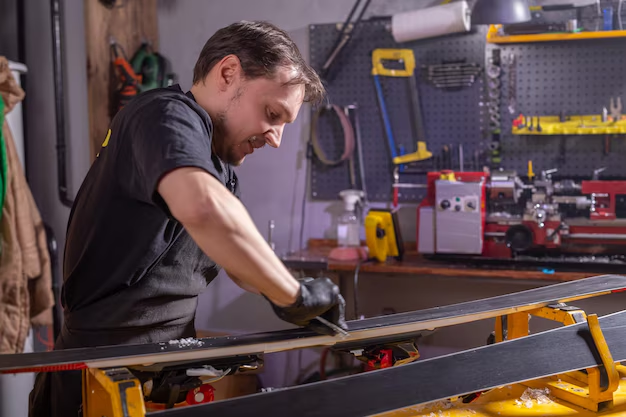
Running a small workshop means every dollar and every square foot counts. You need machines that cut, bend, and punch sheet metal without taking up too much space or breaking the bank. This guide walks you through the entire process in plain words. Follow the steps, and you will end up with tools that fit your jobs, your budget, and your shop floor perfectly.
Know Your Daily Jobs First
Start with a simple list. Write down:
- What materials you work with (mild steel, stainless, aluminum)
- Usual thickness (1 mm, 3 mm, 6 mm, etc.)
- Largest sheet size you handle
- How many parts you make per day
For example: “I cut 2 mm mild steel, 1.2 m x 2.4 m sheets, 20–30 pieces a day.” This list stops you from buying a giant machine you rarely use.
Space Is Gold in Small Shops
Measure your floor twice. Mark the spots for:
- Machine footprint
- Sheet loading area
- Cut parts removal
- Walking space (at least 1 meter around)
A 3-meter shear needs about 5 m x 3 m total. Add a bending machine next to it, and you need another 4 m x 2 m. Draw a quick floor plan on paper. If something does not fit, look for a smaller model.
Pick the Core Machines You Really Need
Most small shops start with three machines:
- Shearing machine – cuts straight lines.
- Press brake – bends metal.
- Punch press – makes holes and shapes.
You can add laser or plasma later when jobs grow. Start simple.
Shearing Machine for Small Shops
Look for hydraulic shears under 2.5 meters long. They cut up to 4–6 mm mild steel. Manual back gauge is fine for short runs. Auto back gauge saves time if you repeat cuts.
Check blade gap adjustment. Manual is okay; auto is better if you switch thickness often. Weight matters—under 2 tons is easy to move with a forklift.
Press Brake Selection
Choose a 40-ton to 63-ton model with 1.6-meter to 2-meter bending length. CNC control is nice but not needed at first. Manual crowning (to keep bends even) works for most jobs.
Look for quick-change tooling. You swap dies in seconds instead of minutes. Segmented dies let you bend boxes and small parts.
Punch Press Options
A 30-ton hydraulic punch with a small table fits tight spaces. Turret punches hold 6–10 tools and switch fast. Single-tool manual punches are cheapest but slow for repeat holes.
Check throat depth. 300–500 mm is enough for most small work.
Power Supply Check
Most machines run on 380 V three-phase. Small shops often have only 220 V single-phase. Ask the seller for a phase converter or pick machines that accept 220 V.
A 5 kW motor is common. Your shop breaker must handle the load. Add up all machines plus lights and welders. Stay under 80 % of your breaker size.
Budget Rules for Small Shops
Set a total budget first. Example:
- Shear: $6,000–$10,000
- Press brake: $8,000–$15,000
- Punch: $5,000–$9,000
- Total under $30,000
Used machines save 30–50 %. Buy from dealers who test and clean them. New machines give 1–2 year warranty.
Manual vs. CNC for Beginners
Manual machines are cheaper and easier to learn. You set stops and bend by eye. Good for custom jobs and low volume.
CNC machines program the cut or bend once, then repeat perfectly. They cost 50–100 % more. Start manual, upgrade when daily parts hit 50+.
Safety in Tight Spaces
Small shops have less room to move. Pick machines with:
- Light curtains or two-hand controls
- Foot pedal covers
- Clear emergency stop buttons
- Blade guards on shears
Train every worker. One accident costs more than any machine.
Noise and Dust Control
Shears and punches make noise. Hydraulic models are quieter than mechanical. Add ear plugs and sound screens if needed.
Dust from aluminum or galvanized steel fills the air. Place machines near an open door or add a simple dust collector.
Easy Maintenance
Choose machines with:
- Grease points marked
- Oil level windows
- Spare parts list in the manual
Check if local shops stock blades and seals. Order one spare blade set at purchase.
Test Before You Pay
Bring your thickest sample sheet. Cut it, bend it, punch it. Measure the parts. Check:
- Cut edge smooth?
- Bend angle correct?
- Hole position exact?
Run 5–10 pieces. Watch for heat, noise, or wobble. A 15-minute test saves months of trouble.
Delivery and Setup
Ask who moves the machine off the truck. Some sellers include forklift service. Level the floor—1 mm difference causes bad cuts.
Bolt machines to the floor if over 500 kg. This stops shaking and keeps accuracy.
Common Mistakes Small Shops Make
- Buying the biggest machine “for future jobs” that never come
- Forgetting three-phase power need
- Skipping the test cut
- Placing machines too close—no room to load sheets
- Buying cheap blades that dull in weeks
Avoid these, and your money stays in your pocket.
Quick Checklist
- List top 3 daily jobs
- Measure floor space + 1 m around
- Shear length under 2.5 m
- Press brake 40–63 ton
- Punch 30 ton with quick tools
- 220 V or 380 V match
- Total budget set
- Manual start, CNC later
- Safety guards included
- Test cut passed
Print this. Tick each box before you order.
Where to Look
Many good machines come from China with modern features and fair prices. For a full range of sizes and clear specs, visit miharmle-cnc.com. They list shear, brake, and punch models made for small shops.
Conclusion
Choosing sheet metal machines for a small workshop is simple when you plan first. Know your jobs, measure your space, pick the right size and power. Test every machine with your own metal. Stay within budget and add safety. Start with manual shear, brake, and punch. Grow to CNC when volume demands it. The right setup turns your small shop into a smooth, profitable operation for years.


